
Vadzo Imaging Launches Armor-821CRS-GMSL2: AR0821 GMSL2 Camera for 4K HDR Image Capture in Embedded Vision Applications
- Format
- Press release
- Published
- November 10, 2026
- Length
- 2,306 words
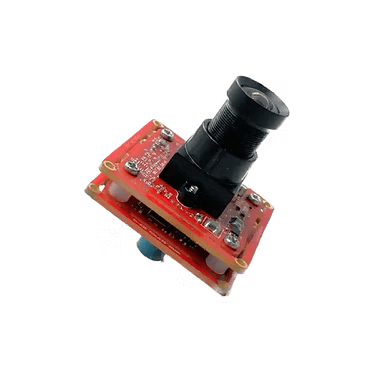
The Armor-821CRS-GMSL2 is an AR0821 GMSL2 Camera, and Vadzo Imaging is launching it for 4K HDR image capture in embedded vision applications.
FORT WORTH, TX, UNITED STATES, November 10, 2026 /EINPresswire.com/ -- Vadzo Imaging, a provider of embedded vision camera products for OEMs and system integrators, today launches the Armor-821CRS-GMSL2, an AR0821 GMSL2 Camera built on the Onsemi AR0821 sensor. Part of Vadzo's SerDes camera portfolio, it combines 4K resolution, HDR, auto exposure, a high performance ISP, and a GMSL2 interface. Vadzo presents an 8MP Color HDR GMSL2 Camera and an AR0821 4K HDR GMSL2 Camera for fleet, mirror, dashcam, vehicle, and scanning systems.
Why an AR0821 GMSL2 Camera Needs HDR and Auto Exposure for Image Capture
Capturing an image sounds simple until the light changes. A camera in an electronic mirror faces the headlights of a following truck at night and a dark road around them. A dashcam looks straight into a low sun and then into a tunnel. A scanning station sees a bright sheet of paper on a dark surface. A fixed exposure suits only one of these conditions, so the camera must adapt, quickly enough that the first frames after a change are still usable.
Resolution and distance add their own limits. A 4K frame helps software read plates, signs, and text, but it also produces a large stream, and the cable between camera and processor must carry it without picking up noise from the vehicle. A serial link such as GMSL2 solves the wiring, and the system must still keep latency low, since a mirror that lags is a safety risk, and the picture must be correct on the first frame after power up.
How an AR0821 GMSL2 Camera Captures 4K HDR Images in Changing Light
The Armor-821CRS-GMSL2 is built on the Onsemi AR0821, an 8MP (3840 x 2160) color rolling shutter sensor with 2.1 micron pixels. HDR extends the span of brightness that one frame records, so a lit page and a dark desk, or a headlamp and a dark road, stay readable together. Auto exposure adjusts exposure time and gain as the scene changes, and the high performance ISP finishes the image inside the module, so the host receives a processed frame. The two work together, since a slow exposure loop leaves the first frames after a change too bright or too dark.
A short calculation shows what 4K gives a scanning station. A 3840 x 2160 frame covering an A4 page, 297 millimeters by 210 millimeters, fits the long edge across the 3840 pixels and the short edge across the 2160 pixels. The limit is the short edge, 2160 pixels over 8.27 inches, which is about 261 dots per inch, and a text scan typically needs 200 to 300. A page can be captured at a useful resolution without stitching, though fine print or small text benefits from a closer view. The figures are illustrative, and a camera also needs even light and a flat page.
For mirrors and dashcams the numbers are about time. A mirror replacement system budgets tens of milliseconds between the light reaching the sensor and the picture reaching the display, and every stage, including exposure, the ISP, the serial link, and the host, takes part of it. GMSL2, the second generation of the Gigabit Multimedia Serial Link, carries video on a forward channel with a nominal rate of up to 6 gigabits per second and control on a slower reverse channel, over coaxial cable or shielded twisted pair, and it is designed for vehicle noise. Because the sensor reads row by row, the camera uses a rolling shutter. Teams should confirm the frame rates, latency, and cable length against the product documentation. A simple test, such as filming a running timer on the display, shows the end to end delay of the whole chain directly.
Product Overview
The Armor-821CRS-GMSL2 is an 8MP color GMSL2 module built on the Onsemi AR0821 sensor. As an AR0821 Rolling Shutter GMSL2 Camera, it offers high resolution at reasonable cost, and as a 4K Color GMSL2 Camera, it records full color. The 8MP 4K Color HDR GMSL2 Camera designation covers its resolution and wide range imaging. The module also serves as an AR0821 Color HDR GMSL2 Camera, a 4K Color HDR GMSL2 Camera, an 8MP Rolling Shutter HDR GMSL2 Camera, a 4K Rolling Shutter HDR GMSL2 Camera, an 8MP Color Rolling Shutter GMSL2 Camera, an AR0821 Color Rolling Shutter GMSL2 Camera, a 4K High Dynamic Range GMSL2 Camera, an AR0821 Color GMSL2 Camera, and a 4K HDR GMSL2 Camera Module for designs that need a long, robust link.
Key Capabilities of the AR0821 GMSL2 Camera
Key specs: 8MP (3840 x 2160) Max Resolution | Onsemi AR0821 CMOS Sensor | 2.1 micron Pixel | Color with Rolling Shutter | GMSL2 SerDes Interface | Lens per Module Configuration
4K Resolution from an 8MP Sensor
The sensor records 3840 x 2160, which gives software enough pixels to read plates, signs, and printed text, and it gives a scanning station about 261 dots per inch across an A4 page. Higher resolution makes a larger stream, so teams should confirm the frame rate and the link budget for the modes they plan to use.
HDR Imaging
HDR extends the range of brightness that one frame records, so headlights and a dark road, a low sun and a tunnel, or a lit page and a dark desk stay readable together. Teams should record real scenes with the mode on and off and confirm how the mode works and what range it offers against the product documentation.
Auto Exposure
Auto exposure adjusts exposure time and gain as the light changes, so brightness stays suitable without manual settings. Its speed matters at tunnel exits and when headlights pass, because slow convergence leaves the first frames poorly exposed. A 4K HDR GMSL2 Camera Module of this kind should be tested on those transitions.
High Performance ISP
The on board image signal processor finishes the picture inside the module, so the host receives a processed frame and does not build an ISP profile for the sensor. It also hosts the exposure and HDR processing. Teams that need raw data and custom tuning should discuss a raw sensor module with Vadzo.
Rolling Shutter Readout
The sensor reads the image row by row, which gives high resolution and good sensitivity at reasonable cost. For most scenes the effect is invisible, and fast motion or strong vibration can show slight skew, which a short exposure reduces. Vadzo offers global shutter modules for platforms where fast motion is the main concern.
GMSL2 Interface
GMSL2 carries video on a forward channel and control on a reverse channel over coaxial cable or shielded twisted pair, and it is built for vehicle noise. The camera can sit where the view is and the processor where it is protected. As an AR0821 GMSL2 Camera Manufacturer, Vadzo supports deserializer selection, cable planning, firmware customization, and enclosure design.
“Image capture succeeds or fails in the first few frames after the light changes. A mirror camera meets headlights, a dashcam meets a low sun, and a scanner meets a bright page on a dark desk. The Armor-821CRS-GMSL2 pairs 4K resolution with HDR, auto exposure, and a high performance ISP, and the GMSL2 link carries the result to the processor over one cable. We are plain about the limits. Latency matters for mirrors, so the whole chain must be measured, scanning needs even light and a flat page, and the details should be confirmed in the documentation. We help customers test on real transitions.” - Alwin Vincent, Product Manager, Vadzo Imaging
Applications for 4K HDR GMSL2 Camera
Telematics and Fleet Management
Fleet vehicles use camera units for mirrors, recording, and driver assistance. The Armor-821CRS-GMSL2 works as an HDR Image Capture GMSL2 Camera in electronic mirrors, where HDR and auto exposure handle the headlights of following vehicles. Mirror replacement systems are subject to vehicle regulations, and teams should measure the end to end latency of the whole chain, since the camera is only one stage of it.
Security and Surveillance
Dashcams record evidence, and the plate or the sign must be readable after a hard stop. The module serves as an Embedded Vision Image Capture GMSL2 Camera with 4K detail and wide range imaging, and teams should confirm recording and storage behavior at the host, including what happens to the clip when power drops during an impact. Recorded video falls under privacy rules that belong to the operator.
Kiosk and Digital Signage
Document scanning stations and kiosks need a clean page capture under fixed lamps. The camera functions as an Embedded Vision Imaging GMSL2 Camera that captures an A4 page at about 261 dots per inch from one frame, and GMSL2 lets the camera head sit on an overhead arm while the computer stays in the base. Even lamps without glare matter as much as the camera, since a shiny page can reflect a light into the lens.
Automation and Robotics
Autonomous ground vehicles and aircraft read signs, lines, and obstacles in changing light. The module works as an Embedded Vision Applications GMSL2 Camera and a 4K Embedded Imaging GMSL2 Camera on such platforms, with a thin coaxial cable to the compute module. Teams should check weight, vibration limits, and connector retention, and they should test exposure behavior on the transitions the vehicle will meet, such as a shaded road into bright sun.
Frequently Asked Questions
Q: Why does an electronic mirror camera need HDR and auto exposure?
A: Vadzo Imaging explains that a mirror camera faces the headlights of following vehicles at night, with a dark road around them. A fixed exposure would either wash out the lamps or hide the road. HDR keeps both readable together, and auto exposure adjusts as vehicles pass. An 8MP Color HDR GMSL2 Camera should be tested on real night traffic, and the whole chain from sensor to display should be measured for latency.
Q: What resolution does a 4K camera give when scanning a page?
A: A 3840 x 2160 frame covering an A4 page, 297 millimeters by 210 millimeters, is limited by the short edge, 2160 pixels over 8.27 inches, which is about 261 dots per inch. Text scans typically need 200 to 300. Vadzo Imaging notes that even light and a flat page matter as much as resolution, and that small print benefits from a closer view.
Q: Why does exposure speed matter after a tunnel exit?
A: The light changes from dark to bright within a second. If the exposure takes many frames to settle, the first frames are washed out, which can hide a sign or a hazard. HDR helps by holding more of the range, and a fast exposure loop helps by correcting quickly. Vadzo Imaging recommends testing on real transitions, and a 4K Color HDR GMSL2 Camera should be recorded on a real route before a design is fixed.
Q: What does a GMSL2 link add to a vehicle camera?
A: It carries high speed video and control over a single coaxial cable or shielded twisted pair, and it is designed for the electrical noise of vehicles. The camera can sit at the mirror, the windshield, or the bumper, and the processor in a protected unit. Vadzo Imaging recommends testing the real cable run with the real connectors.
Q: Why should integrators choose Vadzo Imaging as their 4K GMSL2 camera manufacturer?
A: Vadzo Imaging offers more than a camera module built around a capable sensor. Integrators receive a 4K module with HDR, auto exposure, a high performance ISP, and a GMSL2 link, with candid guidance on latency, exposure behavior, and the details to confirm in the documentation, plus engineering support for lens selection, firmware customization, and enclosure design. Vadzo Imaging maintains evaluation kits with no minimum order requirement, so teams can test on their own vehicle or station before committing to volume production.
Availability
The Armor-821CRS-GMSL2 AR0821 GMSL2 Camera, built on the Onsemi AR0821 sensor, is available now for evaluation and production orders. Evaluation kits include the camera module, a cable, and platform documentation, with no minimum order requirement. Integration teams can record real night traffic and tunnel exits, measure latency on their own chain, and scan sample pages before committing to a production bill of materials. Browse the full range of camera options at Vadzo's website or contact Vadzo at support@vadzoimaging.com to request an evaluation unit or discuss OEM integration requirements.
About Vadzo Imaging
Vadzo Imaging is a global provider of embedded vision solutions and delivers high performance camera technologies and imaging platforms for applications in robotics, industrial automation, UAVs, edge AI, and medical systems. Its products are designed for seamless integration with leading embedded platforms including NVIDIA Jetson, Rockchip, Raspberry Pi, and NXP i.MX. Vadzo supports customers through hardware customization, firmware development, and module level drivers, enabling faster development and deployment of vision based systems across MIPI, USB, GigE, Wi-Fi, GMSL2, and SerDes camera interfaces.
Alwin Vincent
Vadzo Imaging
+1 817-678-2139
alwin@vadzoimaging.com
Visit us on social media:
LinkedIn
YouTube
X
Legal Disclaimer:
EIN Presswire provides this news content "as is" without warranty of any kind. We do not accept any responsibility or liability for the accuracy, content, images, videos, licenses, completeness, legality, or reliability of the information contained in this article. If you have any complaints or copyright issues related to this article, kindly contact the author above.
